

Austin is a city built around live music, late-night culture, and dense urban neighborhoods. That energy is part of what makes it a great place to live. It also makes noise one of the most common complaints among apartment renters across the metro, from downtown high-rises near Rainey Street to suburban communities in Round Rock and Cedar Park.
Most renters who run into a noise problem either do nothing and suffer through it, or escalate too quickly and create a conflict that makes things worse. The right approach sits between those two extremes: a documented, step-by-step process that protects your rights, gives property management what they need to act, and keeps a clear record if the situation ever needs to go further.
Austin's specific noise ordinance, your legal rights as a Texas renter, and the exact steps to take when a noise problem won't resolve on its own are covered in the sections below.
What the Austin Noise Ordinance Actually Says
Austin's noise rules are detailed in Title 9 of the Austin Code of Ordinances. The key provisions renters need to know are:
- General unreasonable noise is prohibited between 10:30 PM and 7:00 AM. This applies city-wide and is the baseline rule for residential areas.
- Amplified sound on residential property must not be audible beyond the property line between 10:00 PM and 10:00 AM. During allowed hours, amplified sound must stay at or below 75 decibels.
- Vehicle sound systems cannot create a sound or vibration more than 30 feet from the vehicle at any time.
To report a noise violation, Austin residents call 311 (or 512-974-2000 if you are outside the city limits). This routes to Austin Code Compliance for non-emergency situations. If noise is paired with an immediate safety concern, call APD's non-emergency line instead. First-offense fines typically range from $50 to $500 depending on the nature and severity of the violation.
One important nuance: the ordinance applies to the city of Austin. Renters in suburbs like Round Rock, Cedar Park, Leander, or Pflugerville fall under their respective city ordinances, which have similar but not identical rules. Check your city's code if you live outside Austin proper.
Your Right to Quiet Enjoyment Under Texas Law
Separate from the city ordinance, you have a legal right to quiet enjoyment of your rental under Texas Property Code §92.052. This is an implied covenant in every residential lease, meaning it applies even if the phrase doesn't appear word-for-word in your lease agreement.
The covenant of quiet enjoyment means your landlord cannot disturb your right to peacefully occupy the property, and it also makes the landlord responsible for taking action when other tenants create ongoing disturbances. This is the legal basis for requiring your property manager to respond to a noise complaint about a neighbor, not just shrug it off as someone else's problem.
There is a meaningful limit to this protection: the covenant applies to people renting from the same landlord. If the noise is coming from a stranger on the street, a neighboring building, or a public event, the landlord's obligations under §92.052 do not apply. Persistent issues from outside sources, like traffic or nearby venues, fall into a different category and require a different approach.
For a broader overview of tenant protections before you sign, the Texas Attorney General's renter's rights guidance and our overview of renting an apartment in Texas both cover what landlords can and cannot require throughout the lease.
Step 1: Document Every Incident Before Doing Anything Else
Documentation is the foundation of everything that follows. Without a clear record, your complaint is one person's word against another's. With a record, it becomes a pattern that property management and, if necessary, a court can evaluate objectively.
Keep a written noise log for every incident. For each entry, record:
- Date and day of week
- Start time and approximate end time
- Nature of the noise: music, shouting, TV, footsteps, dog, construction, etc.
- Estimated volume and how it affected your ability to sleep, work, or use your unit
- Whether you took any action and what the result was
Where practical, capture short audio or video clips on your phone. Texas is a one-party consent state for audio recordings, meaning you can legally record sounds audible in your own space without notifying the other party. Keep these files organized with the date in the filename.
Most leases have a quiet enjoyment clause, and many specify quiet hours that align with or are stricter than the city ordinance. Pull out your lease now and note any relevant clauses. Knowing exactly what your lease says before you raise a complaint gives your case a much stronger foundation.
Step 2: Talk to the Neighbor Directly (When It Is Safe to Do So)
A direct conversation with your neighbor resolves more noise issues than any formal complaint process. Many people simply do not realize how much noise carries through walls and ceilings in apartment buildings. A calm, brief conversation often changes behavior immediately.
A few practical notes on how to approach it:
- Pick a neutral time, not the moment the noise is happening. Walking over at midnight while you're frustrated rarely produces a good outcome.
- Keep it short and specific. Say what the noise is, when it happens, and what you're asking for. Don't list every grievance you've had over the past three months.
- Stay friendly and assume good faith. Most neighbors aren't trying to make your life difficult. Treating the conversation as a problem to solve together gets better results than an accusation.
- Note the response. Add a line to your noise log recording what was said, what was agreed to, and whether things improved.
Skip this step if you have any reason to believe the conversation could turn confrontational or unsafe. Some situations, particularly those involving repeated aggressive behavior or ongoing conflict, are better handled entirely through management from the start.
Step 3: Submit a Written Complaint to Property Management
If the direct conversation didn't happen, didn't help, or isn't appropriate for the situation, the next step is a written complaint to your property manager or landlord. Email is the right medium here because it creates a timestamped record that both sides can refer back to.
Your complaint should include:
- A concise summary of the problem, including dates and times from your noise log
- A reference to the relevant clause in your lease, whether that's a quiet enjoyment provision, posted quiet hours, or a community rules addendum
- A specific request for what you want management to do, whether that's issuing a warning, enforcing lease terms, or arranging a mediated conversation
- Any supporting documentation you have, such as a log or recordings
Keep the tone factual rather than emotional. Property managers respond better to a clear account of specific incidents with documented dates than to a general statement that your neighbor is terrible. After sending the email, save a copy in a folder with your other documentation.
Expect property management to acknowledge the complaint within a few business days. Large corporate-managed communities typically have a formal complaint process with written acknowledgment. Smaller buildings or individual landlords may be more informal. Either way, follow up in writing if you haven't heard back within a week.
Step 4: Call 311 or APD Non-Emergency for Active Violations
When noise is actively occurring and exceeds the Austin ordinance's quiet hours, calling 311 or the APD non-emergency line is appropriate. You don't need to wait for property management to respond or fail before taking this step. If it's 1:00 AM on a Tuesday and your neighbor's music is shaking your walls, a 311 call is exactly what the ordinance is designed for.
How the process works:
- Call 311 (or 512-974-2000 from outside Austin city limits) to file a noise complaint. Have the address ready, including unit number if you know it.
- An officer or code compliance officer may respond and issue a warning or citation on-site. Response times vary depending on call volume and whether the complaint is classified as a priority.
- Request a case or reference number for your records. This number becomes documentation you can attach to any future complaint to property management or in a legal proceeding.
- Call 911 only if the noise is paired with a safety concern, such as fighting, threats, or signs of domestic violence.
A police report or 311 incident number significantly strengthens your position with property management. It moves the complaint from "one tenant's word against another" to "a documented ordinance violation with a case number." Property managers are far more likely to issue a formal lease violation notice once there's an official report attached.
Step 5: Escalate Formally If Property Management Does Not Act

If you've submitted a written complaint with documentation and property management has not taken meaningful action within a reasonable period, typically one to two weeks for a non-emergency situation, your next step is a formal escalation letter.
Send a letter or email to the property manager and, if applicable, the management company's regional office or corporate contact. In this letter:
- Summarize the complaint history: when you first reported, what you included, and what response (or lack of response) you received
- Reference Texas Property Code §92.052 and note that ongoing failure to address the disturbance may constitute a breach of the covenant of quiet enjoyment
- State clearly what resolution you expect and by what date
- Note that you are keeping records of all communications
Send this by certified mail or email with read-receipt enabled. The goal is to create an unambiguous record that you notified the landlord of the problem and they had an opportunity to remedy it. This record is essential if the situation eventually moves toward lease termination or legal action.
If a formal written escalation still produces no response, consulting a tenant's rights attorney or contacting the Texas Tenant Advisor program for guidance is a reasonable next step. Legal remedies in Texas for breach of quiet enjoyment can include damages, lease termination, and in some cases, injunctive relief.
What Happens to the Noisy Neighbor
Renters who receive a noise complaint through property management typically go through the following process under Texas law and standard lease terms:
- Verbal or written warning. The property manager contacts the tenant, explains the complaint, and asks them to correct the behavior. This is informal but starts the documentation trail on the property's side.
- Formal lease violation notice. If complaints continue, the landlord issues a written notice identifying the specific lease clause being violated and gives the tenant a window to correct it, commonly 7 to 14 days for non-payment violations.
- Notice to vacate. Under Texas Property Code §24.005, a written notice to vacate must be delivered before an eviction suit can be filed. The default is three days unless the lease specifies otherwise. As of January 1, 2026, Senate Bill 38 authorized electronic delivery of this notice in addition to personal delivery and mail.
- Forcible detainer suit. If the tenant doesn't vacate, the landlord files in Justice of the Peace court. Under SB 38, the court must hold a trial within 21 days of filing.
There is no specific number of complaints that automatically triggers eviction in Texas. The process is driven by lease terms and whether the landlord has built a documentation trail that supports the case. Renters who are receiving noise complaints, not just making them, should be aware that a history of complaints becomes part of their rental history, which can affect future applications.
Quick Reference: Which Step Fits Your Situation
| Situation | First Step | If That Fails |
|---|---|---|
| Occasional loud music or TV | Polite direct conversation | Written complaint to management |
| Repeated late-night parties | Written complaint to management | Call 311 during active violation |
| Active violation right now (past quiet hours) | Call 311 immediately | Attach case number to management complaint |
| Ongoing problem, management not acting | Formal escalation letter (certified) | Consult tenant's rights attorney |
| Noise from outside building (traffic, venues) | Practical mitigation (white noise, rugs) | Evaluate unit or neighborhood fit |
| Safety concern alongside noise | Call 911 | Notify management in writing after |
Noise That Is Not Covered and What to Do About It
Not every sound in an apartment building rises to the level of an actionable complaint. Normal living sounds, footsteps on hardwood floors, a conversation in a neighboring unit, a television at a reasonable volume during daytime hours, are part of shared-wall living and do not violate quiet enjoyment or the Austin ordinance.
Some noise sources are entirely outside the landlord's control. Street traffic, nearby construction permitted during daytime hours, and large public events like SXSW and Austin City Limits festival are not things property management can address. If your building sits near Red River Cultural District, Rainey Street, or any of Austin's active entertainment corridors, that proximity comes with ambient noise that no lease clause changes.
For noise that is real but not actionable through a complaint process, practical mitigation helps more than formal steps:
- White noise machines or apps mask ambient sound effectively, particularly for sleep.
- Area rugs and heavy furniture absorb impact noise from upstairs neighbors.
- Acoustic curtains or weatherstripping reduce street noise coming through windows and door gaps.
The most effective long-term solution is choosing the right unit to begin with. Floor level, unit orientation within a building, distance from an entertainment district, and the construction quality of the building all affect day-to-day noise significantly. Understanding which neighborhoods in Austin suit your tolerance for ambient urban noise is worth thinking through before you sign, not after.
How Your Apartment Choice Affects Noise Before You Ever Move In
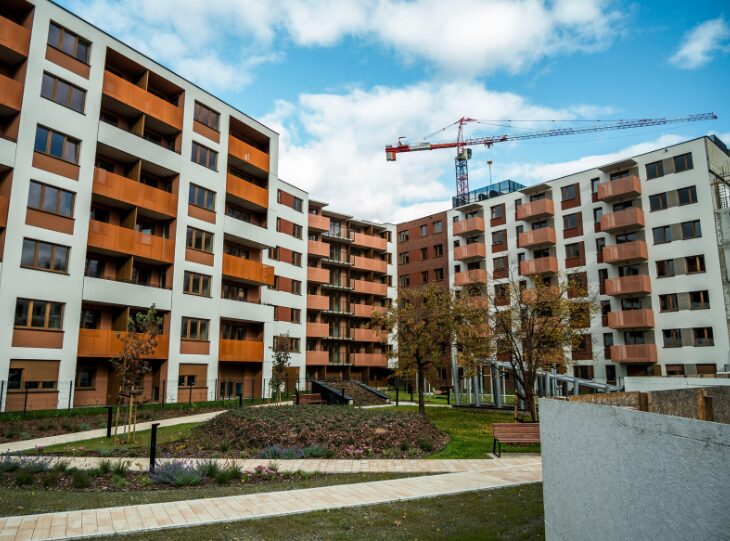
Many noise complaints are preventable with the right information at the search stage. Renters who tour once on a Wednesday morning and sign that afternoon often discover on their first Saturday night that the building faces a bar strip or that the unit above theirs is directly below the gym.
A few things to evaluate before signing:
- Unit orientation. Interior-facing and courtyard-facing units are almost always quieter than units facing a street or entertainment district. Ask which direction your unit faces and what sits directly outside those windows.
- Floor level. Higher floors in a building reduce street noise and reduce the impact of noise from neighbors below. Units on lower floors near garages or lobbies can be significantly louder.
- Building construction era. Older concrete construction often blocks sound better than newer light-frame buildings. Ask about the building's construction type if noise sensitivity matters to you.
- Neighborhood character. A building on a quiet block in Cedar Park and a building on Sixth Street in Austin are both apartments. They are not remotely comparable noise environments. Thinking about this before starting your apartment search saves a lot of frustration later.
- Pet policies and neighbor density. Dog noise is among the most common apartment complaints. If you live in a building with a high pet concentration, it's worth knowing the policy before you sign. Our guide to pet-friendly apartments in Austin covers what to ask about pet rules and how they're enforced.
A licensed apartment locator knows the buildings and neighborhoods well enough to flag these issues before you tour. Understanding what an apartment locator does is worth a few minutes if you are still in the search phase or planning a move in the near future.
Document Early, Escalate Properly, and Let Texas Law Work for You
A noise complaint handled well is a documented, escalating process: record the incidents, address the neighbor when it's safe, report to management in writing, involve 311 if there's an active violation, and escalate formally if nothing changes. Each step adds to a record that protects your rights and gives the people responsible for the building what they need to act.
Texas law is on your side. The covenant of quiet enjoyment is real, and landlords who ignore documented, ongoing noise complaints from tenants face legal exposure. The key is building the paper trail early and consistently, before you need it rather than after.
If persistent noise is part of what's pushing you to find a new apartment, One Place Locators can help you find a building and unit that actually fits your lifestyle, including ones where the construction, location, and community policies make noise a much smaller issue from day one.
About One Place Locators
One Place Locators is a licensed apartment locating service serving renters across Austin and greater Central Texas, including Cedar Park, Round Rock, Leander, Pflugerville, and the surrounding area. Our certified locators help renters find apartments that fit their budget, lifestyle, and specific needs at no cost to the renter, since our fee is paid by the property where you sign.
From knowing which buildings have the best construction quality to understanding how community policies are actually enforced, we bring local knowledge to every search. If you are looking for a quieter building, a more walkable neighborhood, or simply a better fit than where you are now, we are here to help.
Frequently Asked Questions
What are quiet hours in Austin apartment buildings?
Under the Austin city ordinance, general unreasonable noise is prohibited between 10:30 PM and 7:00 AM. For amplified sound specifically, the restriction is tighter: it must not be audible beyond the property line between 10:00 PM and 10:00 AM. Many apartment leases post their own quiet hours, which are often stricter than the city standard, commonly 10:00 PM to 8:00 AM on weekdays and midnight to 9:00 AM on weekends. Check your lease addendum for your building's specific hours.
Can I break my lease because of a noisy neighbor in Texas?
Possibly, but it requires following a specific legal process. If your landlord has been given written notice of an ongoing noise disturbance, has had a reasonable opportunity to remedy it, and has failed to act, Texas courts have recognized this as a potential breach of the covenant of quiet enjoyment. In serious cases, this can support a claim of constructive eviction, which allows a tenant to vacate and terminate the lease without liability for future rent. You should document every step carefully and consult a tenant's rights attorney before taking this action, since doing it incorrectly can leave you liable for unpaid rent.
How many noise complaints does it take to evict someone in Texas?
There is no fixed number set by state law. Texas eviction for noise follows a process: verbal or written warning, formal lease violation notice with a cure period, notice to vacate, and then a Justice of the Peace court filing if needed. What matters most is whether the landlord has built a clear documentation trail showing the tenant was notified and given an opportunity to correct the behavior. One well-documented, ongoing pattern of violations with multiple written notices carries more weight than five informal phone calls.
Should I confront my neighbor directly about noise?
A calm, direct conversation is often the fastest resolution when it is safe to have one. Many noise issues end after a single polite conversation because the neighbor didn't realize how much was carrying through the walls. That said, skip the direct approach if you have any reason to believe the interaction could become confrontational or unsafe. In those cases, start with property management in writing from the beginning.
What if my landlord ignores my noise complaint?
Send a formal escalation letter by certified mail that references your earlier written complaints, cites Texas Property Code §92.052, and states a specific deadline for resolution. If the landlord still does not respond, consult a tenant's rights organization or attorney. Documenting the landlord's failure to act is just as important as documenting the original noise, because it is what establishes their legal liability if the situation escalates to a lease termination or court proceeding.
Does noise affect my rental history?
If you are the one receiving noise complaints rather than making them, a pattern of documented violations can become part of your rental record. Formal lease violation notices and eviction proceedings show up in background checks and rental history reports. This can affect your ability to qualify for future apartments. Our guide on renting with a challenging rental history covers how landlords evaluate past issues and what helps renters in that situation.
Looking for a Quieter Apartment in Austin?
If noise has become a reason to move, we can help you find a building that fits. Contact One Place Locators at (737) 530-9067 for a free, no-obligation conversation. We will match you with apartments based on your budget, location preferences, and the things that matter most to you, including buildings where noise is less likely to be an ongoing problem.